In modern HR management — and especially in tools like Zest — there are two main categories of objectives:
➡️ Performance objectives, integrated into the annual evaluation process,
➡️ Standard objectives, defined by the employee or their manager to guide day-to-day activity.
Although they may look similar, their purpose, timing, and evaluation methods are very different. Here is a simple and comprehensive guide to clearly distinguish between them.
⭐ 1. Standard Objectives: Supporting Day-to-Day Activity
👉 Definition
Standard objectives are operational or role-based objectives, defined to help employees structure, track, and organize their daily work.
They can be:
- created at any time during the year,
- adjusted regularly,
- broken down into sub-objectives or milestones.
👉 Their Role
- Provide visibility on current priorities
- Structure an employee’s responsibilities
- Track the progress of projects or initiatives
- Help employees manage their workload
- Serve as a basis for ongoing discussions with the manager
👉 Characteristics in Zest
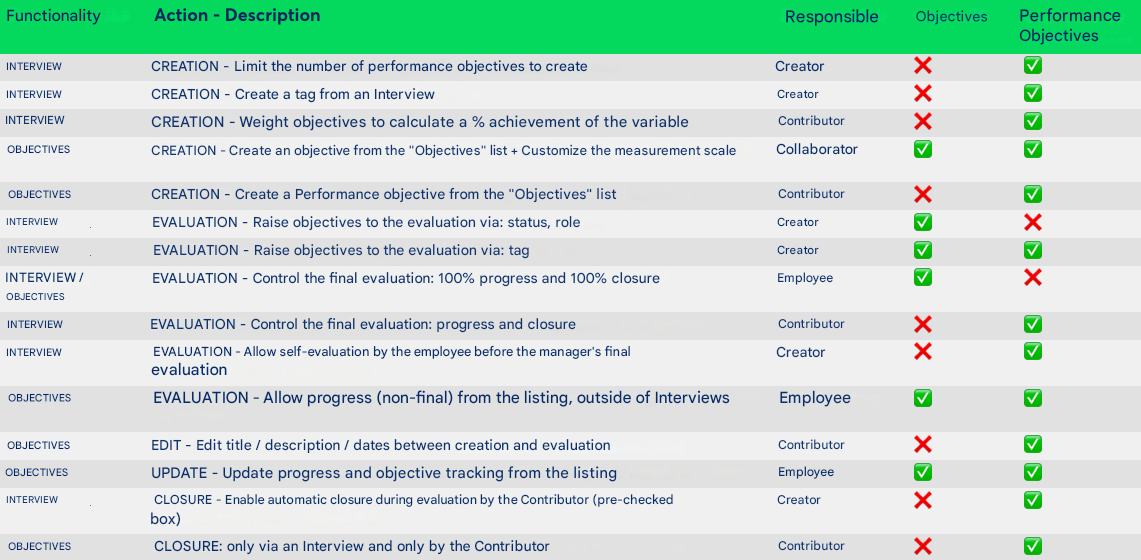
- Freely created by the employee or manager
- Ability to add sub-objectives
- No automatic link to a performance review
- Can be closed or adjusted at any time
📝 These objectives are “action-oriented” and focused on operational management.
⭐ 2. Performance Objectives: Evaluating the Past Year
👉 Definition
Performance objectives are formal objectives, defined during annual or professional reviews, used to assess an employee’s performance over a given period (usually the year).
They serve as a basis for:
- individual evaluation,
- planning for the following year,
- recognizing effort and results,
- HR decisions (training, mobility, compensation, etc.).
👉 Their Role
- Set a clear direction for the year
- Provide a transparent and fair evaluation framework
- Support performance and skill development
- Formalize managerial expectations
👉 Characteristics in Zest
- Created during the review (and can also be created outside of it)
- Can be weighted (e.g., importance 30%, 20%, etc.)
- Evaluated during the review by managers (self-assessment by employees is also possible) and can only be closed within the review process
- Appear in the employee’s performance summary
- Are locked once the review is finalized
📝 These objectives are focused on “evaluation,” “performance,” and “strategic alignment.”
Conclusion
The two types of objectives are complementary:
- Standard objectives support day-to-day activity,
- Performance objectives structure annual evaluation and HR decisions.
When used effectively, they provide a clear framework, smoother tracking, and a more transparent performance culture for both employees and managers.